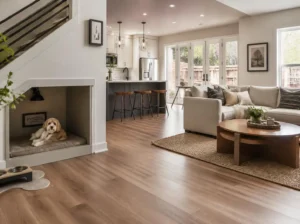

You are planning a renovation project and you want to understand the landscape before you start calling contractors. The first and most important question is a simple one: is your project residential or commercial? The answer changes everything — the code requirements, the contractor you need, the permit process, and the timeline.
Residential and commercial remodeling are two distinct disciplines. They share some tools and trades, but they diverge significantly in how they are planned, regulated, inspected, and executed. Understanding those differences protects you from hiring the wrong contractor for your project — a mistake that costs real money and real time.
At JPS Remodeling, we focus exclusively on residential projects. We want to help you understand why that distinction matters — and why choosing a contractor who knows their lane produces better results for every client.
What Is Residential Remodeling and Who Does It Apply To?
Residential remodeling covers renovation work performed inside or on a private home — a single-family house, a duplex, a townhome, or a condominium unit. If you live there, or intend to live there, it is residential remodeling.
The scope of residential remodeling ranges from a targeted bathroom refresh to a full whole-home renovation. It includes kitchen redesigns, bathroom gut renovations, room additions, basement finishing, floor plan reconfigurations, and exterior upgrades like decks and covered patios.
The JPS Remodeling expert licensed residential remodeling team handles the full spectrum of home renovation work across Austin — from targeted single-room upgrades to complete whole-home transformations.
Residential projects are governed by the International Residential Code in Texas, which sets standards for structural safety, electrical, plumbing, and mechanical work in dwelling units. These codes are specifically designed around how people live in homes — not how businesses operate in commercial spaces.
How Do Building Code Requirements Differ Between Residential and Commercial Remodeling?
Building code differences between residential and commercial remodeling are not minor variations — they are fundamental distinctions that affect how every aspect of a project is designed, built, and inspected.
Here is a clear side-by-side comparison of the key code differences:
- Governing code — Residential: International Residential Code (IRC). Commercial: International Building Code (IBC)
- Occupancy requirements — Residential: designed for a single family or dwelling. Commercial: calculated by occupancy load, use type, and square footage
- Fire safety — Residential: smoke detectors and basic egress. Commercial: sprinkler systems, fire-rated wall assemblies, and emergency lighting above threshold occupancies
- ADA compliance — Residential: not required in private homes. Commercial: required throughout all public-facing spaces — restrooms, entrances, parking, counters, and aisles
- Electrical — Residential: standard household circuit loads. Commercial: higher-amperage systems, dedicated circuits for equipment, and different grounding requirements
- Plumbing — Residential: standard fixture counts for household use. Commercial: fixture counts calculated by occupancy type and load with higher-capacity supply and drainage systems
- HVAC — Residential: sized for dwelling comfort. Commercial: sized for occupancy load, equipment heat generation, and ventilation rate requirements per person
These differences explain why a residential contractor who takes on a commercial project without the right training and subcontractor team creates serious compliance risks. The permit will require a set of plans and specifications that reflect commercial code — and an inspector trained in the IBC will verify compliance at every phase.
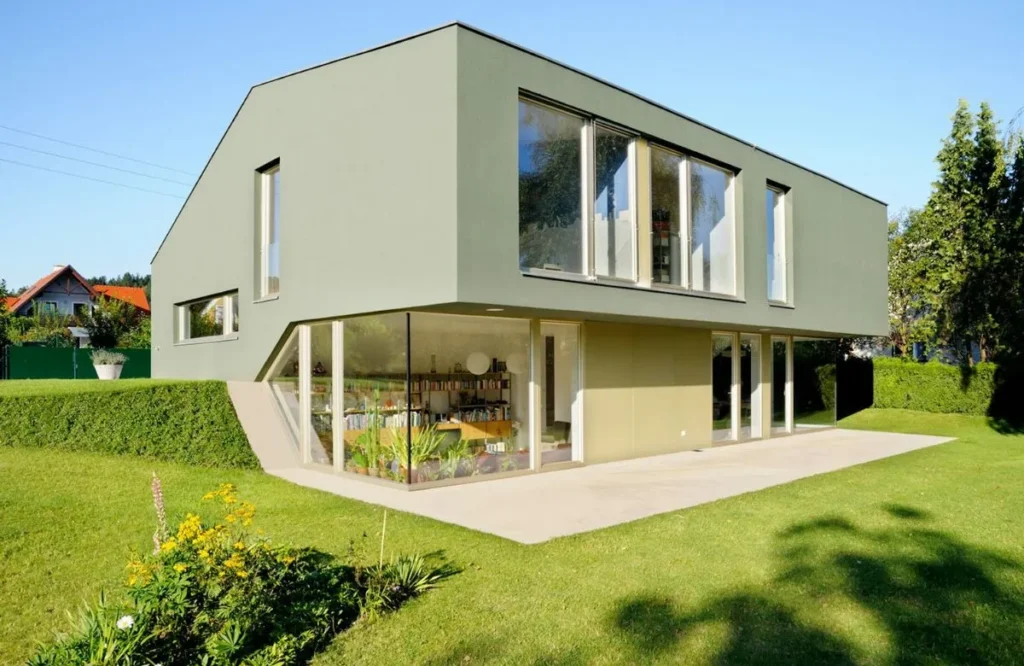
How Does the Client Experience Differ Between Residential and Commercial Remodeling?
Beyond the technical differences in codes and construction, residential and commercial remodeling feel fundamentally different to live through as a client — and a contractor who understands that distinction delivers a meaningfully better experience.
In a residential remodeling project, you are living in or adjacent to the work. The construction happens in your home — where your family sleeps, where your children do homework, where your morning routine happens. The right residential contractor understands this and builds their process around minimizing disruption, maintaining cleanliness, communicating daily, and respecting your space as a home first and a job site second.
In a commercial remodeling project, the dynamic is entirely different. The space is typically unoccupied during the renovation — or the business operates in a separate area while work proceeds. The client is usually a business owner or property manager evaluating results against a business timeline rather than a personal living experience. Communication is more formal. Scheduling is driven by occupancy and business deadlines. The emotional stakes are different.
Neither project type is easier or harder. They require different skills, different communication styles, and different priorities. A contractor who is excellent at one is not automatically excellent at the other.
Residential and Commercial Remodeling Costs Compared
Cost structures differ significantly between residential and commercial remodeling — and understanding why helps you evaluate quotes more accurately regardless of which type of project you are planning.
Residential remodeling costs are driven primarily by material quality, the scope of work, and labor rates in your local market. In Austin, residential remodeling costs have risen with the overall cost of living, but the structure of a residential budget is straightforward: labor plus materials plus contractor overhead and margin.
Commercial remodeling costs are typically higher per square foot than comparable residential work — for several reasons. ADA compliance requirements add cost to restrooms, entries, and circulation paths. Fire-rated assemblies cost more to build than standard framing. Commercial-grade mechanical and electrical systems are more expensive than residential equivalents. And the extended permit and inspection process adds time and overhead that gets built into the project cost.
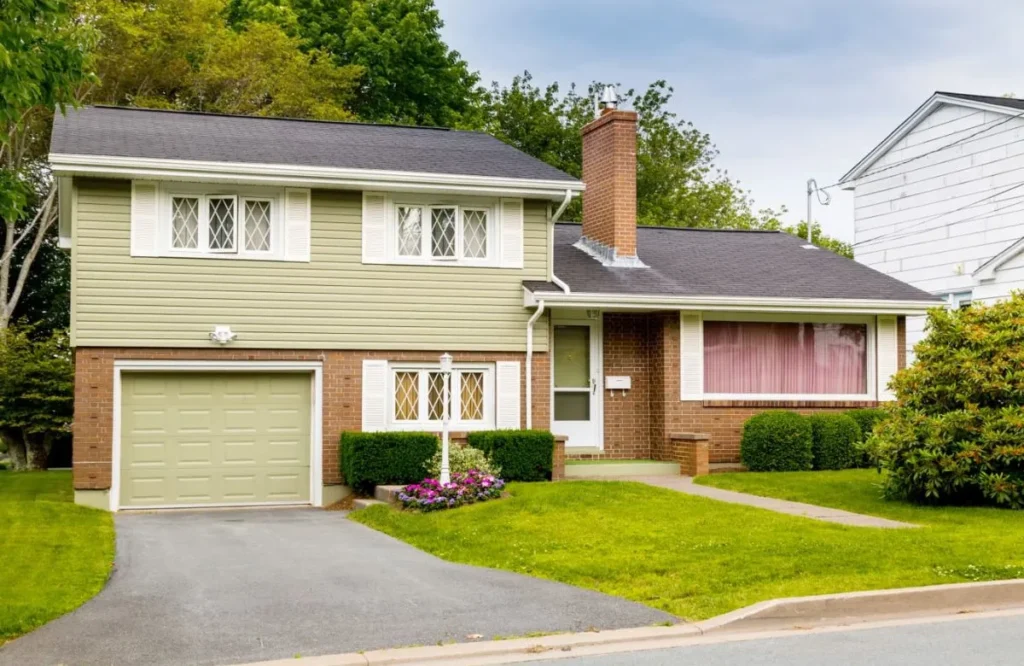
What Are the Key Questions to Ask Before Hiring a Residential Remodeling Contractor in Austin?
Whether you are planning a kitchen renovation, a bathroom remodel, or a whole-home transformation, the questions you ask before hiring your residential remodeling contractor determine the quality of the result.
You should ask specifically about their residential experience — not just general construction experience. Ask to see a portfolio of completed residential projects in Austin that are similar in scope and style to yours. Ask how they handle permit applications and inspection scheduling. Ask who your dedicated point of contact will be throughout the project.
You should also ask about NARI certification. The National Association of the Remodeling Industry certifies residential remodeling professionals who meet rigorous standards for experience, education, and ethics. A NARI-certified contractor is accountable not just to you but to a national professional body — and that accountability protects your investment.
If you are ready to explore your residential remodeling project, contact JPS Remodeling’s experts, no-obligation consultation and estimate.
Why Does JPS Remodeling Focus Exclusively on Residential Remodeling in Austin?
JPS Remodeling is a residential remodeling specialist — and that focus is intentional. Over a decade of working exclusively in Austin homes has built a depth of knowledge, a network of trusted residential subcontractors, and a process refined specifically for the challenges and priorities of homeowners.
We know Austin’s residential permit process inside and out. We know which materials perform best in Central Texas heat and humidity. We know how to work inside occupied homes with minimal disruption to family life. We know how to communicate with homeowners who are making significant personal investments in the spaces they live in every day.
That specialization means our clients get a team whose entire skill set, subcontractor network, and operational process is built around one thing: delivering exceptional results in Austin homes. That is a more focused and more reliable service than a contractor who splits their attention between residential and commercial disciplines.
Explore our other full range of residential services — including kitchen remodeling, bathroom remodeling at JPS Remodeling.
Residential vs Commercial Remodeling — The Bottom Line for Austin Homeowners
The difference between residential and commercial remodeling is not a matter of scale — it is a matter of discipline. Different codes. Different permits. Different costs. Different contractor skill sets. Different client experiences.
If your project is in your home — a kitchen, a bathroom, a room addition, or a full home renovation — you need a contractor who specializes in residential remodeling. A contractor who has built their business, their team, and their process around homes produces results that a generalist or a commercial-first contractor simply cannot match.
According to the National Association of the Remodeling Industry’s professional standards, residential remodeling is a specialized profession distinct from commercial construction — requiring specific training, licensing, and a client-service orientation built around homeowners. Choosing a certified residential specialist is the single most reliable predictor of a positive renovation outcome.
JPS Remodeling is Austin’s trusted, NARI-certified residential remodeling specialist. If you are ready to start your home renovation conversation, call our team today for a free estimate — and discover what a residential specialist delivers.