Why Are Austin Homeowners Planning to Stay — Not Move?
The data on aging in Austin is clear: the majority of homeowners over 60 prefer to remain in their own home as they age rather than transition to a senior living facility. The desire for independence, familiarity, and connection to community is strong — and in Austin, where home values have risen significantly, staying put also makes strong financial sense.
But staying home as you age requires a home that is prepared for the physical changes that come with it. Aging-in-place home modifications in Austin are not about conceding to limitations — they are about designing a home that supports your independence proactively, before a fall or a health event forces reactive changes under pressure.
The team at Austin’s specialist aging-in-place remodeling experts — JPS Remodeling — has worked with dozens of Austin families to create homes that are safe, accessible, and genuinely beautiful. Accessibility and design quality are not in conflict.
Where Do You Start With Aging-in-Place Modifications?
The right starting point for aging-in-place modifications is a whole-home accessibility assessment. This evaluates every space — entry, kitchen, bathrooms, bedrooms, and circulation paths — for potential hazards and improvement opportunities.
The areas that typically require the most attention are bathrooms and entries. Falls in the bathroom are among the leading causes of serious injury for older adults, and entry barriers — steps, narrow doorways, poor lighting — create daily risks that are entirely preventable.
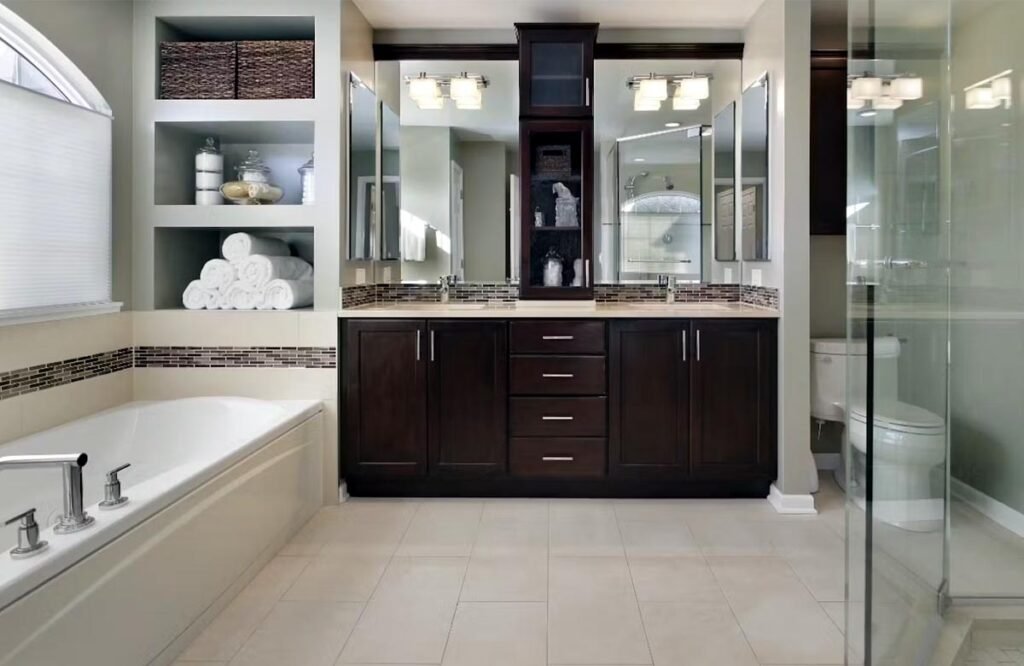
The certified accessible bathroom renovation team at JPS Remodeling focuses first on the modifications that provide the greatest safety impact — curbless showers, grab bars, non-slip flooring, and barrier-free entry — before addressing aesthetic enhancements.
What Are the Most Impactful Bathroom Modifications for Aging in Place?
The bathroom is the highest-risk room in any home for older adults. These modifications consistently deliver the greatest safety improvement:
- Curbless walk-in shower — eliminates the step-over barrier that causes falls
- Grab bars at toilet and shower — strategically placed to support transitions
- Comfort-height toilet (17 to 19 inches) — easier to sit and stand from
- Handheld showerhead on a slide bar — accessible from seated or standing position
- Non-slip tile or textured flooring — reduces fall risk in wet conditions
- Wider doorway (minimum 32 inches clear, ideally 36) — accommodates mobility aids
If you are ready to begin planning your home’s accessibility improvements, book a free aging-in-place home consultation with JPS Remodeling. We assess your specific home and create a prioritized modification plan that fits your timeline and budget.
What Kitchen and Living Area Modifications Matter?
Beyond the bathroom, several kitchen and living area changes significantly improve safety and independence for aging homeowners.
- Pull-out shelves and drawers throughout the kitchen — eliminate the need to reach into deep cabinets
- Lever-style faucet handles throughout — easier to operate with reduced grip strength
- Under-cabinet lighting in the kitchen — improves visibility for food preparation
- Stair handrails on both sides — if the home has multiple levels
- Threshold elimination between rooms — removes trip hazards at room transitions
Each of these modifications is relatively low cost on its own. Grouped as part of a planned renovation, they deliver a significantly safer and more functional home.
How Do You Make Accessibility Modifications Look Beautiful?
The concern many homeowners express about aging-in-place modifications is that they will make the home look institutional — all grab bars and safety rails with no design consideration. That concern is understandable but outdated.
Modern accessible design integrates safety features as natural components of a thoughtful interior. Grab bars now come in designer finishes that match plumbing fixtures. Curbless showers are a current design preference regardless of accessibility needs. Wider doorways feel more open and generous, not clinical.
Aging-in-place home modifications in Austin are most successful when they are planned as part of a broader renovation — not added as afterthoughts. A contractor experienced in accessible design produces results that are both safe and genuinely beautiful. You do not have to choose between independence and a home you are proud to live in.